Kaiser labor talks stall, raising fears of another strike
Published in Business News
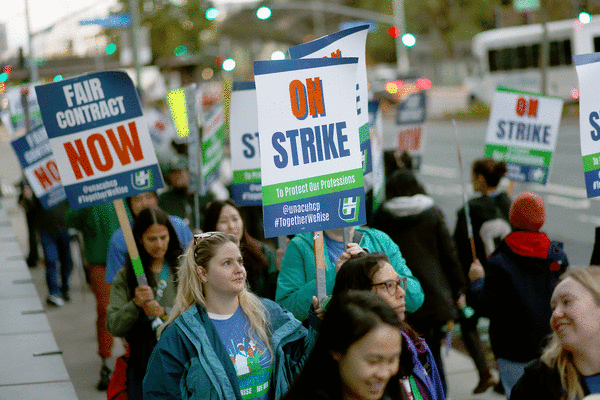
SAN JOSE, Calif. — Talks between Kaiser and a labor union representing health care workers ground to a halt late last week, raising concerns about another strike at California’s largest health care provider.
The union representing 31,000 Kaiser workers statewide — including about 2,000 rehab therapists, physician assistants, nurse anesthetists and others in Northern California — is seeking a new contract with better pay and working conditions. Workers walked off the job in October for a five-day strike, after their contract expired.
Talks between United Nurses Associations of California/Union of Health Care Professionals and the Oakland-based health care giant have broken down amid sharply different accounts of why negotiations stalled.
The union says Kaiser officials unlawfully walked away from negotiations. Kaiser did pause the talks, Elissa Harrington, a spokesperson for Kaiser in the East Bay, confirmed in an email. She said the decision came after an unnamed labor leader went outside formal bargaining channels and threatened to release what Kaiser described as damaging information about the company if an agreement was not reached. Harrington said the union “has refused to share the information it claims to have.”
“This was received as a clear threat to coerce the national bargaining agreement between Kaiser Permanente and the (alliance of health care unions),” Harrington said, referring to the group that negotiates on behalf of UNAC/UHCP and other unions.
Anjetta Thackeray, a spokesperson for the union, flatly denied Kaiser’s account.
“That claim is incorrect, and Kaiser is aware it’s incorrect,” Thackeray said in an email. “There was no blackmail or threat. We’d rather stay focused on what matters: getting to a contract that invests properly in patient care.”
With talks at an impasse, Harrington said Kaiser officials believe the union is planning a new strike. Harrington said Kaiser officials were shown a text circulating among some employees that read: “The goal is to get Kaiser confused so they don’t know how to staff the hospital.”
Asked whether union members planned to walk off the job again, Thackeray said: “As of today, UNAC/UHCP has not served Kaiser with a required 10-day notice to strike,” referencing a requirement of the National Labor Relations Act.
Repeated strikes have worked for Kaiser workers in recent history. In 2023, CalMatters reported that other Kaiser employees won steep raises after walking off the job twice in 12 months.
Two months after the major strike in Oakland, Santa Clara and elsewhere on the West Coast, both the union and Kaiser appear to be offering the same pay proposals that were on the table in October. Kaiser management is still offering a 21.5% wage increase over four years, while the union continues to seek a 25% raise over the same period.
While that gap may appear small, the competing proposals are “billions, not millions” of dollars apart, said John August, who led a coalition of Kaiser Permanente unions from 2006 to 2013 and now heads a Cornell University conflict resolution institute.
Kaiser tends to pay workers better than its competitors, August said, but it is not immune to the understaffing and pay pressures that have characterized U.S. hospitals for decades. The COVID-19 pandemic “ripped the Band-Aid off,” he said, accelerating burnout and departures across the health care workforce.
Kaiser’s proposal would add nearly $2 billion in payroll costs, Harrington said. The union’s proposal would add “another $1 billion in costs over four years, putting affordable health care at risk,” she said.
Union officials counter that Kaiser, the country’s largest private nonprofit health care organization, can afford the increases.
Kaiser Permanente and its affiliated nonprofit, Risant Health, reported $2.6 billion in profits in the third quarter of 2025, following $3.3 billion the previous quarter. The union cites an analysis by the Center for Media and Democracy, a Wisconsin-based nonprofit watchdog, which found that Kaiser holds more than $67 billion in reserves — up $27 billion from four years ago — and spent $72 million on senior executive compensation in 2023.
“They’re not exactly going through tough times,” Joe Guzynski, the union’s executive director and lead negotiator, wrote in a message to members. “All this, while our own members — the people making these profits possible — had to live on salaries that don’t keep pace with the rising cost of living.”
Guzynski and rank-and-file union members say they need significant raises to keep pace with inflation since 2021, along with an expanded pension eligibility, stronger retirement protections and increase staffing levels they say are necessary to safely care for patients.
_____
©#YR@ MediaNews Group, Inc. Visit at mercurynews.com. Distributed by Tribune Content Agency, LLC.







Comments