As Chicago Harbor Lock faces federal cuts, Illinois senators push for more funding
Published in Business News
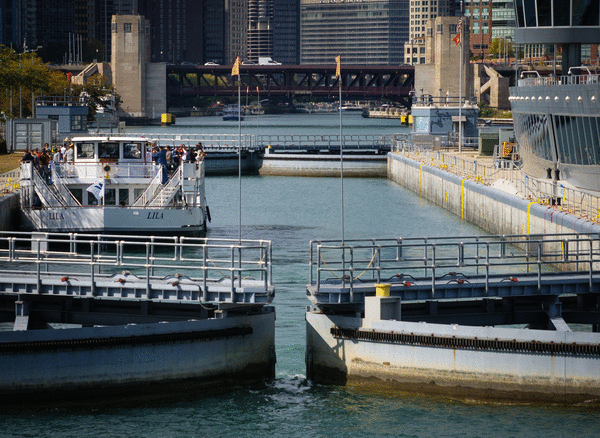
CHICAGO — An amendment to Senate appropriations legislation filed Monday by U.S. Sens. Dick Durbin and Tammy Duckworth would reverse proposed federal funding cuts to the Chicago Harbor Lock, the mechanism through which boats travel to sail between Lake Michigan and the Chicago River.
President Donald Trump proposed a funding cut of more than 90% for the Harbor Lock in his fiscal year 2026 budget request.
The Tribune reported last fall that the Army Corps of Engineers, which runs the lock, had requested $3.85 million for its operation and maintenance this year. But Trump’s proposed budget allocated less than $300,000 to the lock, which is one of the nation’s busiest.
Funding for the harbor goes through the congressional appropriations process, and is part of the energy and water appropriations bill.
Harbor Lock funding can get bumped up above the president’s budget proposal as part of the appropriations process. So far, that hasn’t happened.
Last week, the U.S. House passed an appropriations “minibus” package that combined three different appropriations bills, including the energy and water bill. Congresspeople approved the spending package in a bipartisan vote of 397-28, and it now moves on to the Senate. In the version of the bill from the House, funding for the Harbor Lock was still less than $300,000.
The amendment would provide $16.6 million in funding for the harbor, Durbin’s office said.
Durbin staff said the $16.6 million would match funding levels for the harbor from fiscal year 2024 and would provide funding beyond operations needs. Durbin’s office also said it was not uncommon for lawmakers to request funding at higher levels than what the Army Corps had requested if the status of funding for future years was uncertain.
Last fall, the Army Corps said it would be able to cover costs at the lock this year by using leftover operating funds from 2025 and reallocating some funds it had planned to use for electrical rehabilitation work.
“While not ideal, USACE will have sufficient resources to cover the FY26 shortfall,” the Army Corps said at the time.
However, the Army Corps said, the proposed cut “creates risks in future years” because “subsequent budgetary limits are based on an escalated five-year average of prior funding levels.”
“Nestled along the city’s shoreline, the Chicago Harbor Lock is one of the busiest locks in the country as it safely shuttles through both commercial and recreational boats,” Durbin said in a statement. “A lock this large, one that our city depends on, should have access to the critical resources it needs to safely and efficiently run its operations.”
It’s not clear if the amendment, which would need approval by both the House and Senate, will succeed. Republicans hold majorities in both chambers and lawmakers are looking at a Jan. 30 deadline to fund the government to prevent a partial shutdown.
Durbin, a member of the Senate Appropriations Committee, was one of eight members of the chamber to controversially cross party lines and vote to end the government shutdown last fall. A Springfield Democrat, he is retiring in January 2027.
In a statement, Duckworth, also a Democrat, said the Harbor Lock “is essential for controlling flooding, managing municipal water supplies, moving goods to market and keeping our supply chains resilient not just for the region but for the nation.”
“We can’t fully reap these benefits if the Trump Administration continues to recklessly cut millions from Illinois’s infrastructure,” she said.
The Army Corps did not immediately respond to a request for comment.
The Harbor Lock, located just south of Navy Pier, functions like a water elevator, allowing vessels to travel between the difference in elevations between the river and the lake.
The lock made headlines in September when U.S. Customs and Border Protection agents docked their vessels near it after they conducted a Chicago River cruise whilst armed with rifles.
Durbin and Duckworth wrote a scathing letter to the Department of Homeland Security after that Border Patrol outing, writing that “the use of the Chicago Harbor and its infrastructure as a staging ground for armed Federal operations undermines public trust and risks politicizing Federal assets and agencies.”
While the Trump administration has repeatedly used the threat to withhold federal funding as a political cudgel against Democratically-led cities and states, including in Chicago, insiders told the Tribune last year it was not clear whether or not proposed cuts to the Harbor specifically were politically motivated.
A representative for the International Federation of Professional and Technical Engineers, which represents Army Corps workers, said at the time that while the Trump administration’s motivations for cutting Harbor funding were not clear, “it’s impossible for us not to see the pattern” in how the administration has repeatedly targeted cuts for projects in blue cities and states.
_____
©2026 Chicago Tribune. Visit at chicagotribune.com. Distributed by Tribune Content Agency, LLC.










Comments