The new ICE Age. Chevy pivots back to gas trucks from EVs
Published in Business News
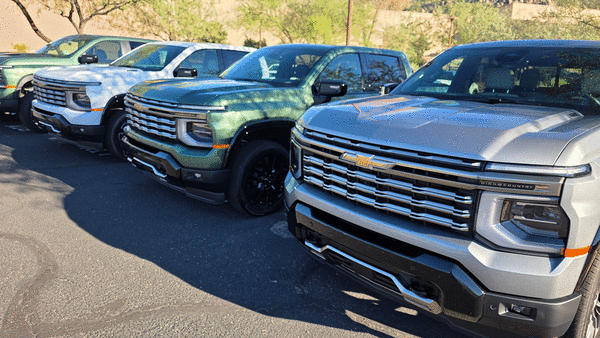
TUCSON, ARIZONA — Full-size trucks were the future of electric vehicle technology. Until they weren’t.
A year after General Motors Co.'s announcement in 2021 that it would phase out internal combustion engines by 2035, Chevrolet introduced the Silverado EV into the light-duty truck segment — the highest-volume segment in the U.S. auto market. From GMC to Ford to Ram, other Detroit truck brands also promised an EV pickup revolution with high torque for towing, battery range for long hauls, and big sales to gain credits for tightening government emissions mandates.
Four years later, the all-new, fifth-generation 2027 Chevy Silverado 1500 pickup unveiled to media in Arizona showcased four ICE powertrains, including two new V-8 engines and a segment-exclusive diesel engine. With anemic sales and reduced government mandates, the electric Silverado was nowhere to be seen.
From V-8s to diesel, ICE truck powertrains are resurgent. Ford and Ram have canceled their big EV trucks as the revolution has gone from boom to bust.
“We really wanted to appeal to the customers and provide them what they wanted,” Ryan Harrington, Chevy trucks senior marketing manager, said here. “We heard from our customers that they wanted to keep V-8s ... so it was important for us to continue to evolve and come up with powertrains that resonate with truck customers. The diesel is one of the most efficient full-size pickups on the road — especially when paired with the (optional) 34-gallon fuel tank, those customers are getting over 900 miles of range on one tank of fuel.”
The Silverado EV sold 5,327 units through the third quarter of 2026, a 43% decline from a year ago as consumer demand plateaued and government subsidies dried up. The electric pickup accounts for just 1% of Silverado’s 418,710 unit sales so far this year. Had it maintained 2025 sales, the EV pickup would only be 2% of Silverado sales.
The Detroit Three have all recorded big losses in their EV-related businesses. GM booked about $7.6 billion in losses for 2025, Ford Motor Co. recorded $19.5 billion in write-downs while nixing F-150 Lightning EV production, and Stellantis NV booked a $26 billion write-down while scaling back all-electric products in favor of gas models. An electric Ram truck prototype never made it to market.
“The reality of the sales potential of electric-powered trucks was clearly driven home to both Ford and General Motors over the past four years,” said Senior Auto Analyst Karl Brauer of iSeeCars.com. “They’ve decided to pivot away from all-electric vehicles back to vehicles they knew people would buy.”
GM has backed off on its plans to go all EV by 2035, now pledging a full lineup of gas and battery-powered vehicles from its Chevy, GMC, Buick and Cadillac brands. Harrington said Chevrolet is not giving up on light-duty electric pickup sales.
“There's still a great opportunity with EVs in the segment, especially with the architecture and the battery capabilities that the team has developed,” he said. “The 450 miles of range with the extended, max battery — there's still a big opportunity here, and we are still seeing sales with the production that we have. For consumers who want to go electric and need a pickup truck, we have an offering for them.”
The Silverado EV’s specs suffer compared to, for example, the standard, diesel-powered Work Truck that Chevy offers and that fleet customers buy in volume.
With a standard range of 283 miles, the all-wheel-drive electric Work Truck costs $56,095 with a towing capacity of 8,500 pounds. A comparable, AWD, $50,780, diesel Work Truck boasts 624 miles of range. Opt for the 34-gallon tank and that grows to 884 miles.
Assume 50% of range degradation for both the EV and diesel when towing, and range declines to 140 and 310 (440 with 34-gallon tank) miles, respectively.
“Gas and diesel trucks accomplish a lot of work without a major hassle to get the work accomplished,” said analyst Brauer. “Some people buy trucks purely for image, but the overwhelming majority of people who purchase trucks have work and travel in mind. It's not nearly as easy to accomplish things with an electric truck as it is an internal combustion-powered truck.
Fueling is also key to the pickup market and gas and diesel infrastructure is robust compared to electrics — with gas trucks quicker to refuel by a factor of 10. Fueling a gas tank to 100% takes five minutes vs. an hour for an electric model.
GM has leaned into the fact that many truck fleet operators store diesel tanks for fueling. In addition to the light duty, 3.0-liter, turbocharged 6-cylinder diesel, Chevrolet has introduced an all-new, 8.3-liter V-8 Duramax turbo-diesel for 2027 in its Heavy Duty trucks (not subject to U.S. emissions rules for light vehicles), making a record-for-GM trucks 1,230 pound-feet of torque for towing.
For fleet customers who own both HD and light-duty trucks, GM’s twin diesel offerings mean fleet customers don’t have to invest in alternative gas or charging infrastructure.
GM’s business model “is a good example of how unrealistic it is to assume that existing truck infrastructure built around diesels can easily be swapped out for electric vehicles,” said Brauer. “With light-duty diesel trucks like GM offers, it's easier to drag more segments into the existing diesel infrastructure than to destroy the . . . pipelines and everything that gets diesel fuel to where people want it to be and replace it with electric cable. Especially when, as anyone who bought an EV Lightning or Silverado discovered, you have less functional trucks.”
GM’s continued development of its signature pushrod V-8s is also significant.
With upgrades of nearly half-a-liter over the last generation V-8s, the new 5.7 and 6.6-liter engines gain 47 horsepower and 61 horsepower, respectively. Torque increases by 45 and 41. Despite the mass increase of the eight pistons, however, the engines are significantly lighter — and more space and cost-efficient — than adding more battery in an EV use case.
So space-efficient are Chevy’s pushrod V-8s that they are used in everything from the Corvette supercar to HD pickups.
“What the team's been able to do with this new-generation V-8 is fantastic,” said marketing chief Harrington. “The 5.7 is best-in-class max towing, and then the 6.6-liter is the most powerful Silverado ever.”
Henry Payne is auto critic for The Detroit News. Find him at hpayne@detroitnews.com or @HenryEPayne.
©2026 www.detroitnews.com. Visit at detroitnews.com. Distributed by Tribune Content Agency, LLC.










Comments