What we know -- and don't -- about the drawdown of federal immigration agents in Minnesota
Published in News & Features
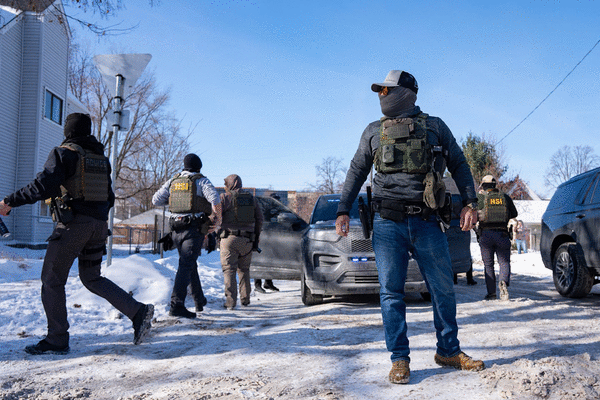
MINNEAPOLIS — White House border czar Tom Homan said Wednesday that the federal government is immediately withdrawing 700 law enforcement officers from Minnesota, marking the first significant pullback of Operation Metro Surge after weeks of heightened immigration enforcement across the state.
The announcement comes a week after Greg Bovino, a Border Patrol commander who became a focal point of public backlash following two fatal shootings by federal agents in Minneapolis, departed the state as the White House sought to reset leadership and contain mounting criticism.
Homan said the drawdown reflects what he called “significant progress” in cooperation between state and federal officials, particularly county jails transferring people targeted for deportation into federal custody. About 2,000 federal officers will still remain in Minnesota — far above the roughly 150 typically assigned to the state — and he warned that further reductions would hinge on continued local cooperation and an end to protests that interfere with enforcement.
What exactly is happening now?
The federal government says 700 agents assigned to Operation Metro Surge are leaving Minnesota “effective immediately.” That reduces the federal footprint from roughly 3,000 agents at the height of the surge to about 2,000 still operating in the state.
How big is that compared with normal enforcement levels?
Even after the drawdown, the number of federal immigration agents in Minnesota remains far above normal. Homan said the state typically has about 150 immigration enforcement personnel — meaning the current presence is still more than 10 times higher than usual.
Why does the White House say agents are leaving?
Homan attributed the decision to increased cooperation between state and federal officials, particularly county jails coordinating transfers of people targeted for deportation into federal custody. He said an “unprecedented” number of counties are participating, though federal officials have not publicly identified which counties or released the agreements.
State and federal officials have been negotiating a deal that would allow county jails to hold people targeted for deportation for up to 48 hours after their scheduled release, a framework that immigration officials have said would pave the way for a reduction in federal agents in Minnesota. Leaders of the Minnesota Sheriffs’ Association have confirmed the talks and said expanded jail access would allow custody transfers to happen inside facilities rather than on the streets — a shift the White House has pointed to as a key condition for drawing down Operation Metro Surge.
Is Operation Metro Surge over?
No. Homan said the goal is a complete drawdown and an end to the surge, but said further reductions depend on continued cooperation from local officials and a reduction in protest activity that federal officials say interferes with enforcement.
What role do protests play in the administration’s decisionmaking?
Homan drew a distinction between lawful protest and interference with enforcement, saying protests that impede officers have already led to 158 detentions and multiple prosecutions. He warned that continued disruptions could slow or halt the drawdown.
What remains unclear?
Federal officials have not said how long the remaining 2,000 agents will stay in Minnesota, which counties are cooperating with jail transfers or what specific benchmarks must be met for additional agents to leave. It is also unclear how a reduced “target list” Homan has referenced is being defined or reviewed.
What happens next?
For now, federal officials say the drawdown is underway but incomplete. Whether Operation Metro Surge fully ends — and how quickly — appears to hinge on negotiations with local officials, protest activity on the ground and decisions made by the White House and the Department of Homeland Security in the coming days and weeks.
_____
(Jeff Day of the Minnesota Star Tribune contributed to this story.)
_____
©2026 The Minnesota Star Tribune. Visit startribune.com. Distributed by Tribune Content Agency, LLC





Comments