Study: Food stamp enrollment up 40%, over $1B in MA SNAP benefits issued improperly in two years
Published in News & Features
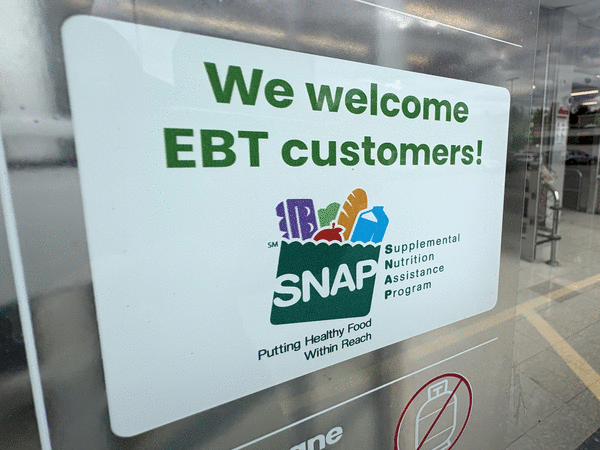
A new study found that fraud risks, weak oversight and the rapid expansion of Massachusetts welfare programs contributed to over $1 billion in SNAP payment errors in just a two-year span and that Medicaid spending now accounts for one out of every four tax dollars spent by Beacon Hill.
The study, entitled “The Welfare State: How Massachusetts’s welfare programs have grown out of control,” was released Thursday by the Fiscal Alliance Foundation and authored by its visiting policy analyst, Hayden Dublois.
The study comes on the heels of tens of millions of dollars in public benefits fraud being uncovered by the U.S. Attorney’s Office and the state Auditor’s Office.
It also cited the Herald’s reporting on a whistleblower in the Department of Transitional Assistance (DTA), who detailed “rampant” and “unabated” SNAP fraud in Massachusetts.
SNAP fraud
Between 2022 and 2024 alone, the study found that Massachusetts spent over $1 billion in SNAP payment errors, with the latest USDA data from FY24 showing a 14.1% payment error rate – among the worst states in the country and well above the national average of 6%.
“More than a billion dollars in improper SNAP payments in just two years is not a rounding error, it is a complete failure of oversight, said Executive Director of the Fiscal Alliance Foundation Paul Craney. “Taxpayers are being asked to fund a system where fraud is ignored, safeguards are weakened, and accountability is treated as optional. That is unacceptable.”
The Herald has reached out to state’s Department of Transitional Assistance for a response to the study.
The Fiscal Alliance Foundation study also points to new federal policy, which will be implemented in FY28, requiring states with error rates above 6% to pay back portions of their annual federal budgets for the program – predicting $400 million in federal penalties if payment errors continue at their current rate.
This all as enrollment in the program continues a dramatic spike – something the report blames on “poor policy choices” by state officials.
In just the past decade, SNAP enrollment has increased by 40%, going from roughly 785,000 recipients in 2015 to over 1.1 million in 2024.
“For example, in FY2024, as many other states were getting work-capable SNAP enrollees back to work following the pandemic, Massachusetts obtained a temporary geographic federal waiver from complying with SNAP work requirements for able-bodied adults without dependents (ABAWDs) that covered nearly 40 percent of the state’s SNAP caseload,” the report states.
“For those not covered by the waiver, Massachusetts exempted tens of thousands of other ABAWDs from the work requirement using their stockpile of discretionary exemptions, which allows the state to exempt an ABAWD from work for any reason. Unsurprisingly, the most recent data suggests that between 65 percent and 75 percent of able-bodied SNAP enrollees in Massachusetts do not work at all,” it continued.
Meanwhile, Gov. Maura Healey refuses to turn over detailed information of SNAP recipients in the Bay State, including immigration status, to the USDA for what the Trump administration says is to root out waste, fraud and abuse. Healey says the administration has not assured her office that the information will not be turned over to Immigration and Customs Enforcement (ICE).
“Massachusetts has refused to participate in that common-sense program integrity venture. I mean, for goodness sake, even Vermont turned over its data to the federal government. If Vermont can do it, if New Hampshire can do it, Massachusetts can do it,” Dublois told the Herald. “And I think the decision not to share that data to identify deceased and multi-state SNAP enrollment is an actively harmful policy choice that just further illustrates how the current administration is not taking SNAP waste fraud and abuse seriously.”
The study found that with just a portion of states participating in this arrangement, the USDA has already identified 300,000 deceased or potentially deceased recipients and as much as $1.1 billion worth of annualized expenditures attributable to duplicate enrollment nationwide.
Medicaid fraud
The study also analyzed increased Medicaid spending in Massachusetts, finding that Medicaid programs now account for nearly one out of every four dollars in the state budget as costs have continued to rise over the past ten years. Specifically, the study found that Medicaid spending has increased by nearly 50% since 2015, costing taxpayers tens of billions of dollars.
It also found that caseloads in Temporary Assistance for Needy Families (TANF) has seen continued and significant growth while work-related activities drop, calculating that roughly half of work-eligible recipients have been meeting the minimum work requirements.
“Beacon Hill has prioritized expanding enrollment over protecting taxpayers and ensuring these programs are being used as intended. When you combine skyrocketing caseloads with weak verification and rising error rates, you create an environment where fraud can thrive. Reform is long overdue, and it starts with restoring basic accountability and putting safeguards back in place,” Craney said.
Housing and homelessness spending has also surged, according to the study, with emergency shelter costs approaching the $1 billion mark through spiking enrollment in the HomeBASE and similar programs.
Need for reform
The Fiscal Alliance Foundation is calling for immediate reforms to be made in state welfare programs that put a direct focus on fraud prevention, recipient verification, and program accountability.
“Massachusetts’s welfare programs are on a collision course with reality. Years of ignoring improper payments while promoting more program enrollment at all costs have now put the Commonwealth’s taxpayers in a bind. Policymakers need to reverse course and adopt commonsense reforms to address out-of-control welfare spending,” Dublois added.
_____
©2026 MediaNews Group, Inc. Visit at bostonherald.com. Distributed by Tribune Content Agency, LLC.





Comments