A wave of dead seabirds washes ashore at Venice Beach
Published in News & Features
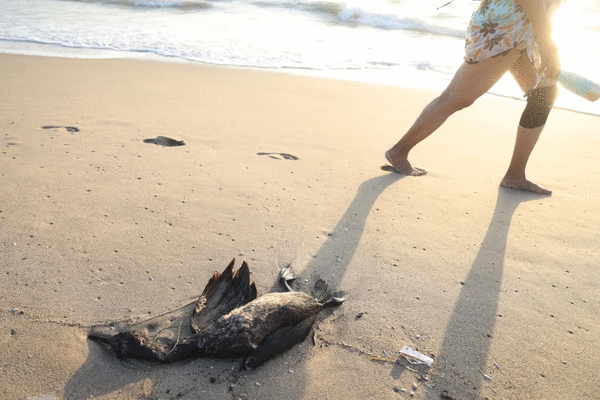
LOS ANGELES — More than 40 dead cormorants, the black birds known for perching on rocks and stretching their wings to dry, washed ashore on Venice Beach this weekend.
“We don’t usually see that many,” Nicole Mooradian, spokesperson for L.A. County Department of Beaches and Harbors said.
Carcasses lay strewn along the shoreline as the beach brimmed with weekend activity. Swimmers and loungers largely ignored them.
County employees found the dead birds Sunday morning and worked into the afternoon clearing them.
Since last fall, an influx of dead and emaciated seabirds washing up on California beaches has had the attention of wildlife experts. They say many are probably tied to lack of food — an extreme marine heat wave that is causing fish, the birds’ prey, to travel north or deeper underwater. Parasites and infections are also thought to be contributing.
The cause of death for this weekend’s cormorants is unknown. The L.A. County Department of Public health said by the time it was able to evaluate reports of the dead birds, the animals had been removed.
It saw no elevated risk to the public.
There are three species of cormorants in Southern California: Double-crested, Brandt’s and Pelagic. They dive for fish, and only their neck and head sticks out of the water when they swim. Up close, their eyes are very colorful.
Typically, when dead seabirds are found, the Department of Beaches and Harbors has its crews photograph them and, if requested, transport them to local wildlife organizations for analysis. If the department is short-staffed, however, it discards the animals through its “normal disposal services.” That’s what happened this weekend.
Bird flu has not been identified as a driver of the recent die-off, but the detection of the disease among marine life in the Bay Area this spring prompted the California Department of Public Health to advise the public to stay 150 feet away from all marine animals and seabirds when possible.
If you see a debilitated seabird do not not to touch it, attempt to feed it, remove any embedded fishing hooks or take photographs with it, the California Fish and Wildlife Department advises.
If the seabird is stranded, contact a local wildlife rehabilitation facility. Dead birds can be reported to California Fish and Wildlife.
_____
©2026 Los Angeles Times. Visit at latimes.com. Distributed by Tribune Content Agency, LLC.






Comments