Maryland rabies cases spiked this summer. Experts can't pinpoint why
Published in News & Features
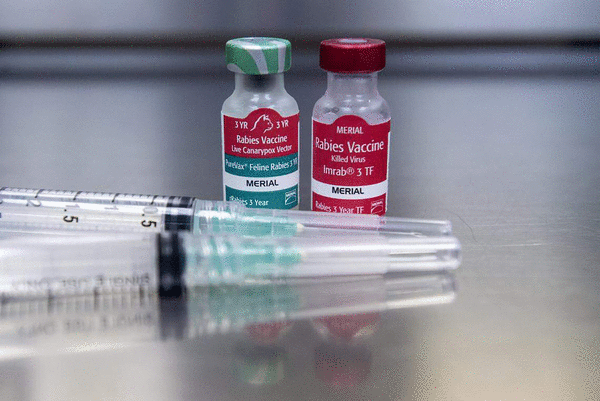
BALTIMORE — University of Maryland Medical System saw a spike in rabies-related encounters this summer as state animal bite cases hit their highest point in August since 2018, according to data from UMMS and the Maryland Department of Health.
UMMS saw 493 rabies-related encounters across its 14 emergency departments from June to August this year. That’s nearly a 55% spike from last year. In 2025, UMMS’ emergency departments logged 318 encounters.
“To be honest with you, I’m not sure I can quite speculate on why it’s higher,” Dr. Bobbi-Jo Lowie, an emergency medicine physician at the University of Maryland Medical Center’s Adult Emergency Department downtown, told The Baltimore Sun.
Centers for Disease Control and Prevention issued a health advisory earlier this month surrounding a nationwide rabies increase in human exposure. According to the CDC, the organization received 17% more rabies-related inquiries than during the same period in 2025.
Rabies is a viral disease in mammals that is nearly 100% fatal if not treated. It can be prevented through a series of scheduled shots either before or after someone is bitten, Lowie said.
State Health Department spokesperson David McCallister told The Sun that annual rabies detections in animals fluctuate due to a blend of ecological shifts, public reporting habits and targeted disease control measures.
He said numbers typically peak in spring, summer and early fall, primarily driven by increased interaction between humans, pets and wild animals, along with changes in wildlife behavior.
According to data from the Health Department, rabies cases found in animals have steadily declined over the past two decades, cutting from a high in 2001 of 513 cases to 226 last year. McCallister attributes this to oral vaccine programs, shifts in testing behavior and stricter pet health mandates.
As of Saturday, there have been 187 total cases this year, primarily driven by rabid raccoons, according to MDH data. August, in particular, saw 34 confirmed rabies cases, matching its highest point since 2018.
Despite several rare rabid beaver attacks dominating headlines during the summer, Lowie said foxes, bats and skunks are the usual culprits for the rabies-related encounters UMMS’ emergency departments see.
“I’ve seen all kinds,” Lowie said. “I’ve seen bats commonly; I’ve seen dogs commonly — people that are unsure of vaccinations of dogs or a dog that they call outside that wasn’t with an owner.”
Harford County logged the highest number of cases in the state, with 24 as of Saturday, according to state data.
Ronya Nassar, the director of population health for the Harford County Health Department, told The Sun the reason behind the increase in state cases can’t be pinpointed. But increased media coverage of rabies has spurred people to call if they or their pet come into contact with a potentially rabid animal.
“We truly want to stress that individuals should leave wildlife alone,” Nassar said.
________
©2026 The Baltimore Sun. Visit at baltimoresun.com. Distributed by Tribune Content Agency, LLC.





Comments