Is the WA 'millionaires tax' really coming for public pensions?
Published in News & Features
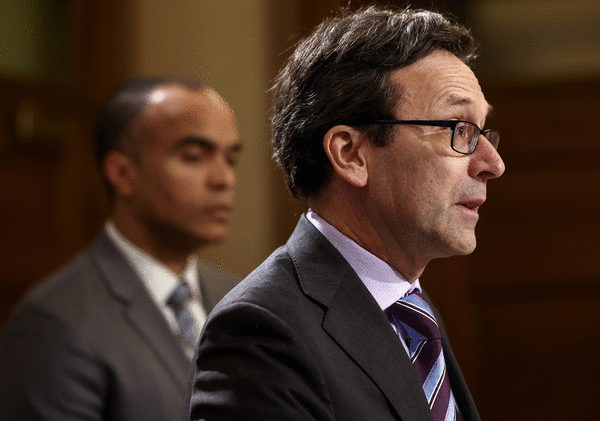
SEATTLE — When you think about the mansion- and yacht-owning millionaire crowd, retired schoolteachers don't typically leap to mind.
Nevertheless, foes of Washington's new high-earner income tax are making a pitch to teachers — and other public-sector workers — contending the so-called millionaires tax" is a threat to their pensions.
In ads and a recent televised debate, supporters of Initiative 645, which aims to repeal the tax, have hyped technical language in the new law that specifies public pensions are not exempt.
In practice, that means little for retired public employees right now.
The tax, scheduled to take effect in 2028, only applies to household income of more than $1 million a year. No one in the state pension system receives even half that.
The state's highest individual pension payout now is $385,292 a year, according to Adam Torgerson, a spokesperson for the Washington State Department of Retirement Systems. The vast bulk of state retirees get much less. For example, the state's largest pension plan, known as PERS 2, pays an average of roughly $33,000 a year to recent retirees with 21 to 25 years of state service, according to the pension system's latest annual report.
Steve Gordon, who chairs the pro-I-645 campaign, concedes the tax as enacted would not immediately affect public-sector pension recipients.
But, Gordon said in an email, public employees and retirees, like everyone in Washington, "are subject to the 9.9% tax on WA income, they just fall under the $1 million deduction, for now."
That's the real thrust of the I-645 campaign's argument — that the pension language is evidence that Democrats plan to lower the income-tax threshold to sweep up more households.
"Odd thing to write into a bill about millionaires... If it only ever hits $1 million, why did Olympia bother taking the shield off your pension?" said Redmond hedge fund manager Brian Heywood, who bankrolled I-645, in a post on X addressed to public employees.
Gov. Bob Ferguson has vowed to veto any expansion of the "millionaires tax" to lower income brackets, but some Democratic state lawmakers have openly discussed doing just that in exchange for cutting other taxes.
State Senate Majority Leader Jamie Pedersen, the prime sponsor of the "millionaires tax," said lawmakers drafted it to line up with how pensions are generally treated for tax purposes. State pensions are subject to federal income tax, for example.
So if a person gets a state pension and has other income that pushes their total pay over $1 million, they'd be on the hook for the new tax. The 9.9% tax applies only to the portion over $1 million, so someone making $1.3 million would owe tax on $300,000 of that, for a tax bill of $29,700.
Across Washington state, only about 25,000 people are expected to make enough to owe the new income tax when the first payments come due in 2029.
Sensing an opportunity to sway voters with the pension issue, the Yes on I-645 campaign has run ads featuring Tim Manly, fire chief in Brinnon, Jefferson County.
In the ads, Manly accuses lawmakers of breaking a promise to public workers with "one sentence, buried in the income-tax bill."
"I'm not a millionaire; I'm a firefighter. I'm voting yes on 645 to restore retirement protections," Manly says in the ads, which disclose the top donors to the I-645 campaign, including the Seattle venture capital fund Madrona Venture Group.
The effort has gotten the attention of the state's top labor unions, which have strongly backed the new high-earners income tax and urge a "No" vote on I-645 to keep it in place. They've called the pension argument a dishonest scare tactic from rich people who want to avoid the "millionaires tax."
April Sims, president of the Washington State Labor Council, said in an online video response that a teacher in Olympia would have to work for 278 years to earn pension benefits of more than $1 million.
"So don't believe the lies coming from the same people who have made it clear that they don’t care about us. The 'millionaires tax' won’t affect anyone’s pensions. Do the math. It can’t, she said.
That message was echoed in postcards mailed by the labor council to voters this week.
The state's top public-sector unions have largely bankrolled the No on I-645 campaign, trying to preserve the new tax, which is expected to raise more than $3 billion a year.
Most of that money will be directed to the state operating budget, which pays for K-12 schools, healthcare and other services, including the salaries for public workers who provide the services.
With the Nov. 3 Election Day mail ballot deadline approaching, the union-backed opposition campaign against I-645 has a lot more money to spread its message.
The No on 645 campaign has raised $12.8 million as of Friday. Its largest single donor is the Washington Education Association, which represents teachers and other K-12 school employees. The union has donated more than $3 million.
The Yes on 645 campaign has raised $3.3 million, including $1 million from Lawrence Hughes, a retired Medina businessman.
© 2026 The Seattle Times. Visit www.seattletimes.com. Distributed by Tribune Content Agency, LLC.




Comments