Commission recommends prohibiting legislators from obtaining retail cannabis licenses
Published in News & Features
RICHMOND — Virginia legislators want to prohibit General Assembly members and their relatives from getting a retail cannabis license. The legislative commission tasked with overseeing Virginia’s transition to a retail cannabis market voted Monday to recommend adding that prohibition to the existing retail cannabis legislation when lawmakers convene for the session in January.
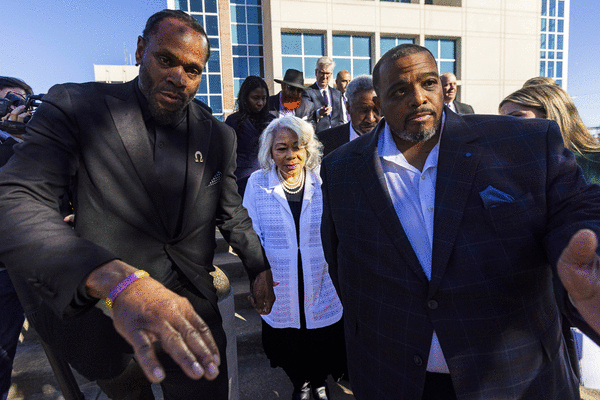
The recommendation came as Sen. Louise Lucas, D-Portsmouth, appeared in federal court Monday afternoon and pleaded not guilty to racketeering charges. The federal government alleges Lucas sought to use the retail cannabis licenses, which have not been awarded yet, to personally enrich herself and her family. Lucas does not sit on the cannabis retail market commission.
The policy proposals, as recommended by the commission, aren’t by themselves bills, and they would need to go through the full legislative process to become law.
Other recommendations out of Monday’s meeting would reduce the civil penalty for public consumption of cannabis; prevent people from being charged twice for public consumption of cannabis and consumption on school grounds; clarify what ordinances localities can pass around cannabis stores; ensure the increase of the personal possession limit if the July 1 rollout date shifts; and direct that some revenue from sales go toward education and childcare.
Civil penalties
Currently, the civil penalty for the public consumption of cannabis is $25 and is set to increase to $250 July 1, when the retail cannabis is slated to open. Lawmakers said $250 was too high a fine, but they didn’t land on an exact number.
Del. Katrina Callsen, D-Albemarle, said that she supported a reduction from $250 but that based on conversations with local law enforcement, $25 was likely too small a number to incentivize the enforcement of the violation.
“No police officer is going to enter into an interaction for a $25 fee, and if we don’t want the law enforced, then why are we putting the law down on the books?” she said. “There’s some number somewhere, and I would want it tied to the efficiency and ability of police to enforce the laws as we’ve written.”
Lawmakers also noted that $250 might be too high given the lack of places where it’s OK to consume cannabis in the state.
“If you live in an apartment building, for example, and the rule is you can’t smoke in your unit, you can’t smoke outside, there are no places that you can go,” said commission Vice Chair Paul Krizek, a delegate representing Fairfax.
Consumption on school grounds
In addition to voting to recommend that violators of the public consumption provision can’t be also charged with consumption on school grounds, lawmakers added a provision that would remove the civil penalty altogether for kids under 18. They would still be obligated to enter into a substance abuse treatment or education program.
Local ordinances
Under the existing legislation, localities have some authority over when and where cannabis stores operate. The policy proposal recommended Monday would clarify that local governments can’t mandate they be farther than 1,000 feet away from schools, hospitals and daycares, though localities could make the requirement shorter. The policy proposal would also prohibit localities from restricting the hours of operation to fewer than eight hours a day or seven days a week.
Legislators’ ownership in cannabis industry
The fourth policy proposal would prohibit General Assembly and their immediate family members from holding direct or indirect ownership interest in the cannabis industry in Virginia. That’s something Republican Tommy Norment proposed when he was the legislature in 2023. His proposal would have imposed the restriction, punishable as a Class 6 felony, during legislators’ time in office and for five years after they leave.
Technical amendments for possession limits
The existing legislation that permits the possession, but not the sale, of small amounts of cannabis, has a provision that puts the personal possession limit at 1 ounce. That provision will be repealed effective July 1, when the new legislation allowing for the retail sale of cannabis and for a 2 ounce personal possession limit takes its place. That could become tangled if, for whatever reason, the rollout of the retail market is delayed after July 1.
Revenue allocation
Del. Cia Price, D-Newport News, proposed and the commission agreed to an additional recommendation that state revenue generated from retail cannabis sales be allocated toward education, substance use prevention programs in specific schools, and childcare. The actual percentages of how that money will be allocated will come with the bill language.
The legislation as it passed stipulates there will be an initial 6% state sales tax on cannabis products that would be bumped up to 8% in 2029, with the option for localities to impose their own additional 1% to 3.5% sales tax.
________
©2026 The Virginian-Pilot. Visit at pilotonline.com. Distributed by Tribune Content Agency, LLC.






Comments