After mayor's arrest, Kissimmee declines -- for now -- to repeal ethics rules
Published in News & Features
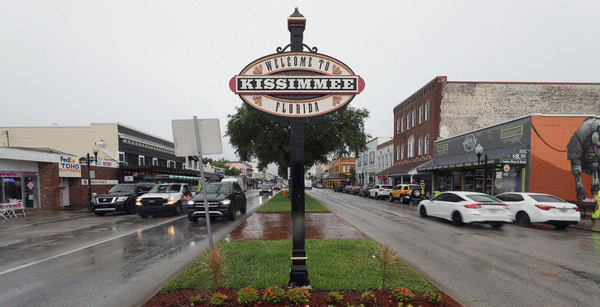
ORLANDO, Fla. — One month after its mayor was arrested for what prosecutors say was an ethical breach, Kissimmee city commissioners were faced with a peculiar item this week: whether to repeal the city’s ethics rules entirely.
Dan Langley, an attorney hired by the city, said Tuesday evening that his analysis had deemed the local rules conflict with state law, were outdated, and opened the door to pricey legal fees to investigate claims in a post-Amendment 3 world where cities and counties are looking to cut costs.
But ultimately the commission — two members were sworn into new terms just before the meeting — vehemently disagreed, with new Mayor Angela Eady slamming City Attorney Kalanit Oded for even bringing it forward.
“We gave you one task, and that was to update that particular code or ordinance. And instead of updating it, you just deleted it,” Eady said. “We’re paying you a substantial amount of money … I do think we asked for a specific project to be done, and it was not done. So now we’re going to send you back to the table to do it.”
Commissioners instead decided to schedule a workshop to discuss changing the policy to be consistent with state law and assure voters that elected officials are acting ethically in the wake of sordid headlines about the city.
Eady became mayor after her predecessor, Jackie Espinosa, was suspended Oct. 30 by Gov. Ron DeSantis after her arrest nine days earlier. She was charged after a local ethics investigation led to one by the Florida Attorney General’s office, which accused her of using $50,000 in grants funded by federal COVID-19 relief funds to benefit three companies linked to her and her family — despite warnings it could be illegal.
Four businesses that rented space in buildings owned by Espinosa also received $40,000 in grants. Espinosa hasn’t denied receiving the money but has contended she did nothing wrong, as any small business in the city was eligible.
She is charged with organized scheme to defraud, a first-degree felony, and grand theft, a second-degree felony and has pleaded not guilty.
In May, Kissimmee commissioners voted 3-2 to pause handling ethics complaints, as the code requires complaints be sent to a special prosecutor to determine if probable cause exists. The problem with that, city officials said at the time, was that it could lead to expensive legal fees to investigate obviously frivolous complaints.
As special prosecutor, attorney Mayanne Downs, a partner at the DownsAaron firm and the longtime attorney for the City of Orlando, investigated a complaint against Espinosa and recommended proceeding with impeachment proceedings against the mayor and forwarding the complaint to law enforcement.
The complaint was filed by a city resident, who said after Downs released her report that he was pleased with the findings and viewed it as “a sign that the system still works.”
An impeachment measure failed in a 2-2 commission vote in August.
Downs also investigated two ethics complaints this year against Commissioner Janette Martinez that accused her of misusing her office to benefit friends and associates. One of the complaints was dismissed by Downs, while the other was dismissed by the Florida Commission on Ethics.
Kissimmee’s rules don’t allow the city to consider whether it is duplicating efforts by the state ethics board, which generally reviews ethical claims against local officials.
Langley said that at the future workshop, if Kissimmee opts to keep local ethics rules in place, they must be stricter than state law.
Florida lawmakers amended the state’s ethics codes in 2024, he said, making any ethical breaches a violation of state law that are required to be investigated by the Florida Commisison on Ethics rather than the local body.
“Your code, as I have examined it, is mostly overlapping completely with state law,” Langley said. “It is my opinion that as of two years ago, your code of ethics has been preempted by state law and has been void.”
Don Frano, a Kissimmee resident, argued during public comment that more scrutiny of elected officials is needed.
“This creates the appearance that this commission is making itself harder to scrutinize,” he said. “This deepens my concern that this commission is protecting itself from oversight when the public needs more of it.”
-------------
©2026 Orlando Sentinel. Visit at orlandosentinel.com. Distributed by Tribune Content Agency, LLC.





Comments