Moira Macdonald: Who won big, and who made history, at this year's Oscars
Published in Entertainment News
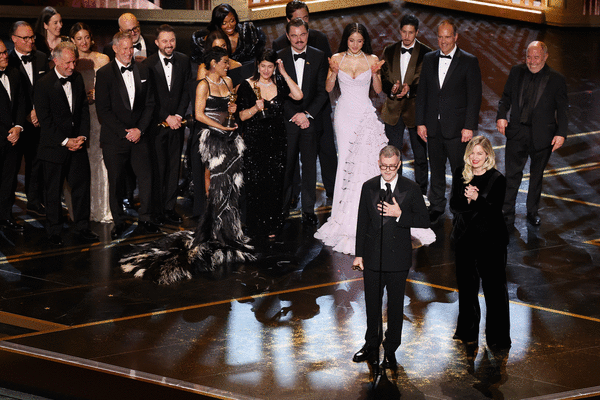

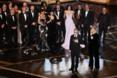
The 98th annual Academy Awards Sunday night were both predictable and surprising, in the best of ways.
A lot of us predicted that the evening’s top honors would be a toss-up between Paul Thomas Anderson’s “One Battle After Another” and Ryan Coogler’s “Sinners,” and indeed, that’s exactly what happened. “One Battle After Another,” a thrilling gonzo tale of a former revolutionary in search of his kidnapped daughter, came out on top, with six awards including best picture, but “Sinners,” a gloriously atmospheric period horror musical (how often do those come around?) had a good night, too, winning four Oscars.
Anderson, who had been nominated 11 times previously but never won, broke his streak with multiple Oscars, winning for best director and adapted screenplay, in addition to best picture. “I’m so happy to call the movies home,” he said. The film, he said in his screenplay acceptance speech, was written for his children, “to say sorry for the housekeeping mess that we left in this world we’re handing off to them. But also, with the encouragement that they will be the generation that hopefully brings us some common sense and decency.” “One Battle After Another” also won for best supporting actor (Sean Penn, who wasn’t present), film editing and casting.
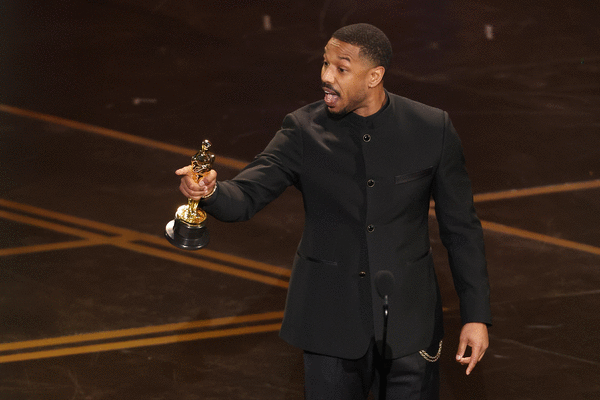
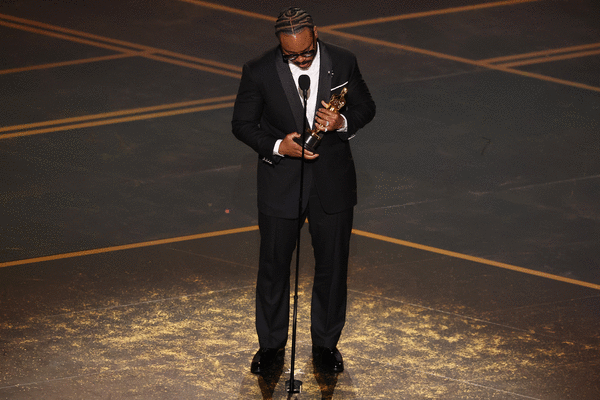
“Sinners’” four awards included best score, cinematography, original screenplay and an unusually hard-to-call best actor race, won by Michael B. Jordan for playing twin brothers Smoke and Stack. In a gracious if slightly rattled acceptance speech, he gave thanks to his family, to Coogler (“You gave me the opportunity and the space to be seen”), and acknowledged previous Black winners in the acting categories, expressing the honor of being “amongst these giants, amongst my ancestors.”
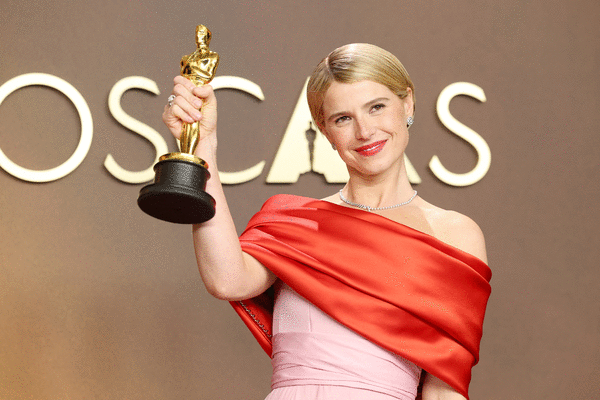
In what was seen as the only major award of the night that was a foregone conclusion, Jessie Buckley won best actress for playing a grieving young mother in “Hamnet.” At the podium, she noted that her entire Irish family was in the room, and that it was Mother’s Day in the United Kingdom. “I would like to dedicate this,” she said of her award, “to the beautiful chaos of a mother’s heart.”
The winners, however, weren’t the only emotional highlights of the evening. A particularly moving In Memoriam segment began with Billy Crystal speaking of his close friend Rob Reiner — whose films, Crystal said, “were about what we aspire to be.” His speech was followed by a poignant, silent lineup on stage of actors who’d appeared in Reiner’s films, several looking tearful. (Reiner and his wife Michelle were tragically killed in December; their son Nick Reiner has been charged with their deaths.) Rachel McAdams gave a moving tribute to several leading ladies lost this year: Claudia Cardinale, Diane Ladd, Catherine O’Hara and especially her co-star in two films, Diane Keaton — “a legend with no end.”
The segment ended with Barbra Streisand speaking about her friend and co-star Robert Redford — “an intellectual cowboy who blazed his own trail” — and singing a brief verse from “The Way We Were.” Her voice is no longer the powerhouse it once was, but it just made the moment all the more moving — a gentle reminder of the passage of time.
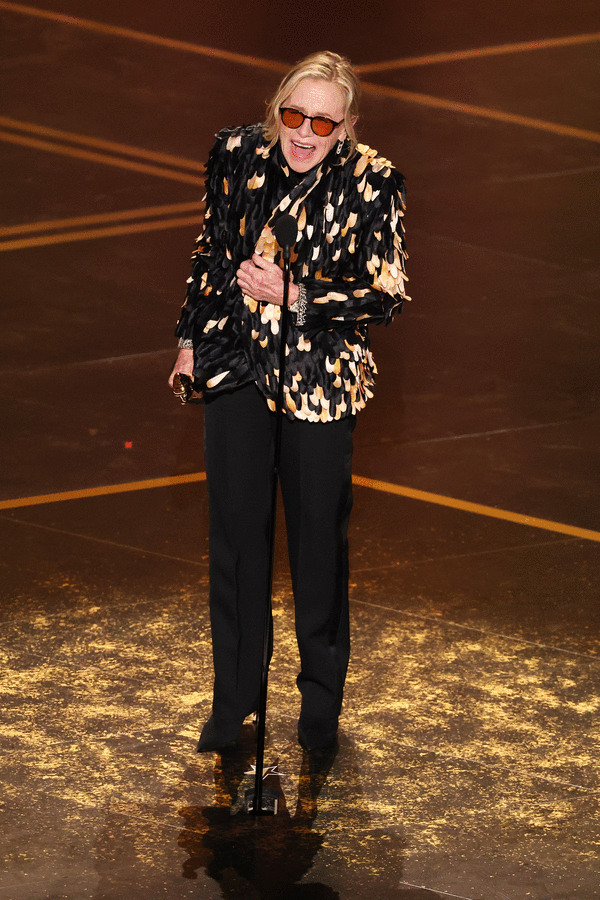
It was a night that saw the awards spread out among multiple films. Amy Madigan, 40 years after her previous Oscar nomination, won best supporting actress for “Weapons,” and gave a charmingly scattered speech in which she thanked her husband, actor Ed Harris, “who’s been with me forever, and that’s a long-ass time.”
Guillermo del Toro’s “Frankenstein” swept the design categories, winning for costume design, production design and makeup/hairstyling. Box-office hit “Avatar: Fire and Ash” won best visual effects; “Sentimental Value,” despite losing most of its nine nominations, took best international feature. “KPop Demon Hunters” took best song — with “Golden” becoming the first K-pop song to win an Oscar — and best animated film. Writer/director Maggie Kang noted, “For those of you who look like me, I’m so sorry that it took us so long to see us in a movie like this. But it is here. And that means that the next generations don’t have to go longing. This is for Korea and for Koreans everywhere.”
And for every bit that didn’t land — Anna Wintour, co-presenting two awards with Anne Hathaway, inadvertently reminded us that it’s better to have actors doing these gigs — there was something else that delighted. Two showstopping musical performances, from “Sinners” and “KPop Demon Hunters,” held the audience rapt (though boo to the decision to have viewers scan a QR code to hear the other nominated songs). The cast of “Bridesmaids,” reuniting for the film’s 15th anniversary, contributed some funny bits, poking fun at Steven Spielberg, Martin Scorsese and themselves. Presenter Kumail Nanjiani smoothly handled a very rare Oscar tie, in the live action short film category (something that’s only happened six times before).
The first woman to win an Oscar for cinematography, Autumn Durald Arkapaw for “Sinners,” asked all the women in the room to stand up, “because I feel like I don’t get here without you guys.” And, for the brand-new category of best casting, members of their casts introduced each nominee — which meant Chase Infiniti, of “One Battle After Another,” got a very big audience before which to thank casting director Cassandra Kulukundis, who gave her her first film acting job.
The night wasn’t without political expression. Pavel Talankin, the subject and co-director of the winning documentary “Mr. Nobody Against Putin,” spoke passionately against war. The makers of the winning short documentary “All the Empty Rooms,” about children lost to gun violence, were joined by Gloria Cazares, mother of a child killed at Robb Elementary School in Uvalde, Texas, who told the audience, “If the world could see their empty bedrooms, we’d be a different America.” Presenter Javier Bardem dropped a “Free Palestine” before presenting international feature film, and Jimmy Kimmel, presenting the documentary films, noted that there are “some countries that don’t support free speech. Let’s just leave it at North Korea and CBS.”
And while O’Brien’s monologues occasionally touched on political differences, he also took time to emphasize unity, noting that the Oscars are particularly resonant during difficult times. The nominees, he noted, represent 31 different countries, and “we pay tribute tonight not just to film, but the ideals of global artistry, collaboration, patience, resilience, and that rarest of qualities today, optimism.” A worthy message, anytime.
———
(Moira Macdonald is the arts critic at The Seattle Times.)
———
©2026 The Seattle Times. Visit seattletimes.com. Distributed by Tribune Content Agency, LLC.








Comments