Dozens of very vivid, rare snakes released into the wild in California, with many more to come
Published in Science & Technology News
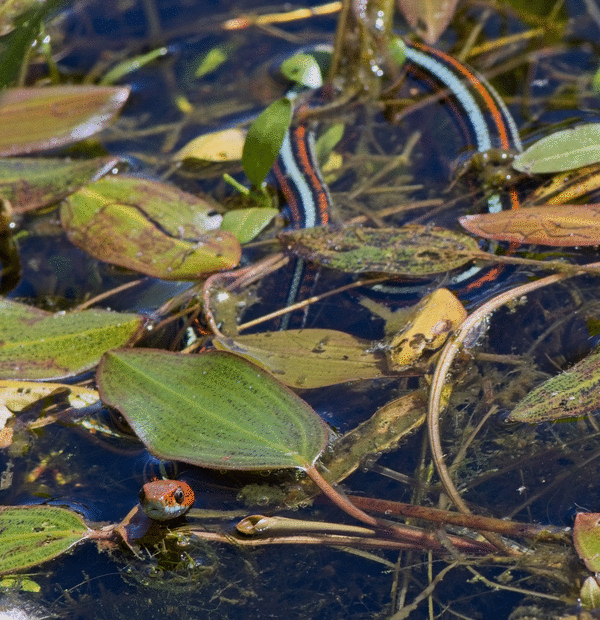
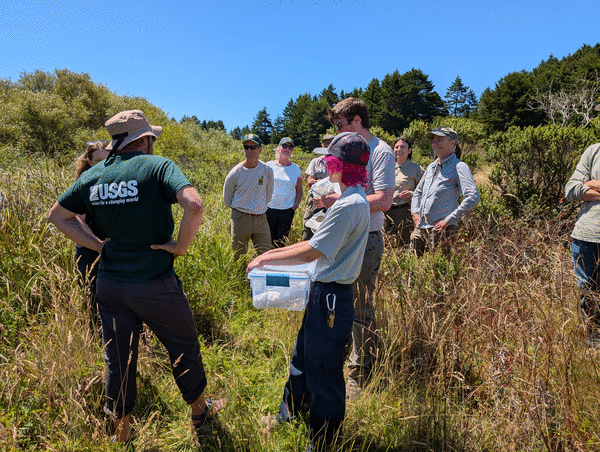
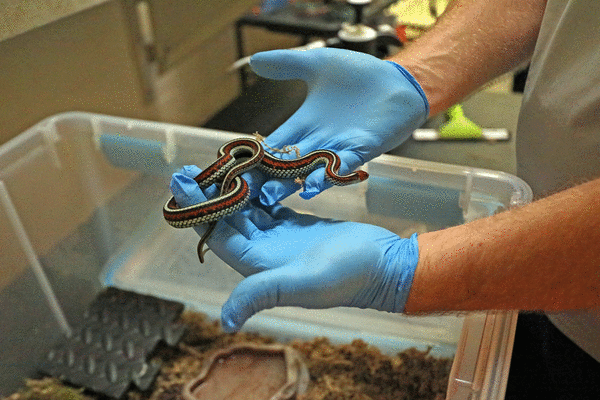
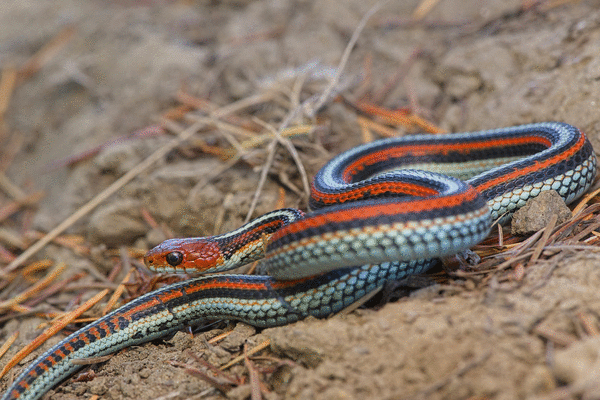
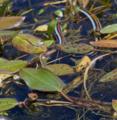

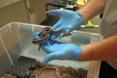
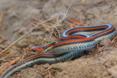
A group of young endangered garter snakes was released into the wild by the San Francisco Zoo & Gardens earlier this month, marking the first successful release of San Francisco garter snakes raised in captivity.
Small, vibrantly colorful San Francisco garter snakes are found only in San Mateo and Santa Cruz counties. They first appeared on the endangered species list in 1967.
The young snakes were raised and released by a collaborative head-starting conservation program led by the zoo, the U.S. Geological Survey, the U.S. Fish and Wildlife Service and others.
More than 130 additional baby snakes have been born at the zoo and are set to be released next year.
"This is an extraordinary accomplishment for everyone who has worked for generations to protect this remarkable species," said Karine Tokatlian, a biologist at the Midpeninsula Regional Open Space District. "This first release is an important step toward building healthy, resilient populations that can sustain themselves over the long term."
Head-starting is a conservation strategy that involves raising baby animals in captivity while they are most vulnerable, and then releasing them into the wild after they have grown. After the release, scientists closely monitor population sizes at the release area.
Only a couple of thousand San Francisco garter snakes are estimated to remain in the wild. The snakes have faced several challenges including drought, disease, declining prey populations, invasive species, vehicle strikes and illegal poaching.
The snakes also depend on unique habitats that have been fragmented by human development. The San Francisco Recreation and Parks Department and other agencies are leading habitat restoration and protection efforts. The efforts also aim to help conserve the threatened California red-legged frog, which is part of the snakes' diet.
"This effort illustrates what can be achieved when partners prioritize rigorous scientific research, genetic testing, habitat conservation, and specialized care," said Justin Sloan, acting deputy field supervisor for the U.S. Fish and Wildlife Service's Sacramento office. "It represents a significant step toward the recovery of the San Francisco garter snake."
The head-starting program began in 2025 when biologists with the U.S. Geological Survey collected pregnant snakes from a healthy population in a preserve. The snakes were sent to the San Francisco Zoo, where they gave birth and were then released back into nature.
After being raised at the zoo, the young snakes underwent genetic testing to determine the ideal release locations for genetic diversity. They were distributed among several existing snake populations that were in need of more individuals.
"For our team at the San Francisco Zoo, watching these snakes grow from newborns into healthy juveniles ready for release has been incredibly rewarding," said Dr. Rochelle Stiles, director of field conservation at San Francisco Zoo & Gardens.
In July, the Trump administration finalized a rollback of the Endangered Species Act, paving the way for drilling, mining and other human development across protected wildlife habitats.
©2026 Los Angeles Times. Visit at latimes.com. Distributed by Tribune Content Agency, LLC.






Comments