COUNTERPOINT: Trump's flawed import tariff policy
Published in Political News

It has been 10 months since President Donald Trump’s “Liberation Day” import tariff announcement in April. Ultimately, that announcement led to U.S. import tariffs rising to an average of 17 percent, their highest level in 100 years.
It is still too early to draw conclusions as to the overall damage those tariffs might inflict on the economy. However, it is not too early to see that those tariffs are failing to meet the basic objectives of narrowing the trade deficit, increasing manufacturing output and employment, and securing for the United States a more level international trade playing field.
Start with the trade deficit. For years, Trump has argued that the trade deficit is a national emergency that requires remedying through an aggressive import tariff policy. In his view, the trade deficit is a reflection of how foreigners have been ripping us off with their unfair trade practices and becoming wealthy at our expense. It is also a reflection of how foreigners have been stealing our manufacturing jobs.
Trump seems not to buy the alternative view that the trade deficit has afforded the U.S. the exorbitant privilege of being able to continually live beyond its means. Foreigners have done so by providing us with the wherewithal to spend more than we produce.
The numbers to date suggest that import tariffs are not succeeding in narrowing the trade deficit. Indeed, far from narrowing, the trade deficit in the first nine months of Trump’s second term widened by 14% relative to the comparable period a year earlier. This is reminiscent of the 40% increase in the trade deficit that occurred during Trump’s first term in office.
A key lesson that Trump did not learn from his first term was that, even with import tariffs, an excessively expansive budget policy can give rise to a country’s overall spending exceeding its overall level of production. The reason the trade deficit blew out in Trump’s first term, despite his resort to import tariffs, was that the 2017 Tax Cut and Jobs Act had the effect of blowing out the budget deficit and reducing the country’s savings level. It would seem that this is what is now occurring with Trump’s One Big Beautiful Bill.
According to the International Monetary Fund, that bill will keep the U.S. budget deficit at or above 7% of GDP for as far as the eye can see. Such a large budget deficit would seem inconsistent with reducing the trade deficit, regardless of how high Trump might set import tariffs.
If Trump’s import tariffs are not succeeding in reducing the trade deficit, they are also not succeeding in bringing manufacturing jobs back home. Indeed, in 2025, the United States lost 50,000 manufacturing jobs while manufacturing output was virtually flat. Meanwhile, the overall unemployment rate has risen from 4% at the start of Trump’s second term to 4.6% at present.
Contrary to Trump’s claim that foreigners would be the ones who paid for the tariffs, it has turned out that tariffs have kept inflation uncomfortably high. That is now causing Trump an affordability problem. Instead of prices falling as Trump had promised on the campaign trail, inflation is still running at the 3% that prevailed at the start of his second term.
Yet another area in which Trump’s tariff policy has not met expectations is our trade relations with China. Far from China buckling under our import tariff pressure, it was Trump who had to back down from his 140% import tariff on China without getting much in return. It seems that Trump miscalculated China’s leverage over the United States, given that China is the world’s major supplier of rare earth metals and batteries vital to many high-tech industries. It also appears that Trump miscalculated how much more ready Chinese President Xi Jinping was to bear economic pain than Trump was to tolerate a stock market downturn.
The jury is still out on how much long-term economic damage will be inflicted on the U.S. economy by our retreat from a globalized economy. However, both economic theory and the United Kingdom’s recent experience with Brexit suggest that Trump’s import tariff policy will limit the benefits that the U.S. economy could gain from fully engaging in international trade.
_____
ABOUT THE WRITER
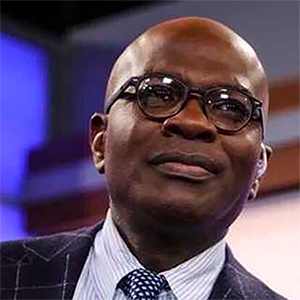
Desmond Lachman is a senior fellow at the American Enterprise Institute. He wrote this for InsideSources.com.
_____
©2026 Tribune Content Agency, LLC


















































Comments