Backers of film tax credit seek action in lame-duck session
Published in Political News
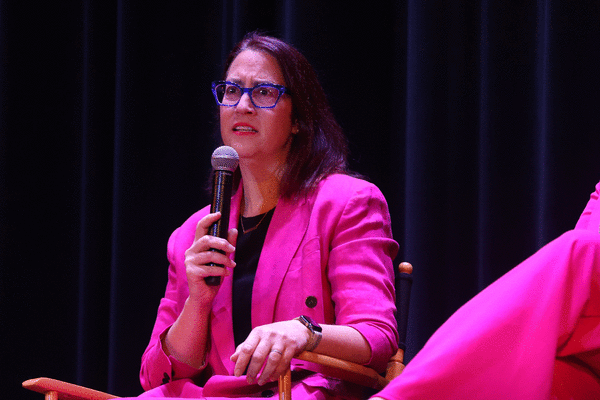
WASHINGTON — Lawmakers plan to give Hollywood some airtime when they return to Washington after the midterm elections.
With just weeks to go before the end of the 119th Congress, lawmakers and advocates are making a bipartisan push to get a proposed federal film tax credit over the finish line. But competing priorities and a limited runway could complicate the yearslong effort.
Advocates are hoping to strike while the iron is hot and leverage their momentum, which includes presidential support and the release of bipartisan bill text, into a final passage effort, potentially in a year-end tax package or alongside another piece of must-pass legislation.
The proposed bill, which was unveiled in September, would provide a 20% base tax credit for qualifying film projects produced in the United States. It also includes a list of additional 5% bonus credits that could be tacked on to the base credit, for a maximum of a 30% credit.
The legislation would revitalize the U.S. film industry, they argue, and staunch the exodus of American jobs as production companies relocate overseas. The bill has bipartisan backing in both chambers, as well as a swell of industry support.
President Donald Trump in late August threw his support behind the issue, urging Congress to pass a bipartisan film tax incentive before the end of the year to avoid an exodus to foreign countries, which he said “can be done quickly, accurately, efficiently and, importantly, will benefit ALL of America.”
But some opponents are skeptical of the overall benefits of such a credit on the economy — and other concerns, like the potential impact on the national deficit, could also become hurdles.
Rep. Laura Friedman, D-Calif., a former film producer who now represents Hollywood in Congress and pushed for a state-level film tax incentive in the California legislature, said she began searching for bipartisan collaborators as soon as she came to Capitol Hill in early 2025.
She soon found a Republican partner in Rep. Brian Jack, whose district includes the suburbs of Atlanta, another major American production hub. Friedman and Jack have since become leading voices within their respective parties in the push to draft a film tax incentive proposal.
Now, they’re looking to get the bill to Trump’s desk in the waning days of the 119th Congress before the legislative environment potentially shifts in the new year.
“The truth is, we have 65, at least, countries that offer national film tax credits,” Friedman said. “We are the only major film-producing country that does not. Entertainment’s our largest export in this country, and it’s a signature industry that’s important on many levels for the United States.”
Finding an opening
Even before he was sworn in for the second time, Trump had announced that actors Jon Voight, Mel Gibson and Sylvester Stallone would serve as his “special ambassadors” to Hollywood. In the nearly two years since, Voight has been a key voice in the effort to advance a film tax credit, serving as a liaison to the White House and meeting with lawmakers and industry stakeholders in hopes of hammering out a deal.
Over the course of the 119th Congress, lawmakers sought to piece together industry perspectives and reach a consensus that satisfies stakeholders and the White House.
That push has included the creation of a new congressional caucus — the Congressional American Film & TV Production Caucus, which was launched in September — and it comes as the industry is also launching a flurry of lobbying efforts in hopes of getting the proposal across the finish line.
A veritable Who’s Who of Hollywood organizations, including the so-called Big Three Hollywood talent agencies, came together this month to launch the American Entertainment Alliance, a group aimed at strengthening the U.S. film and television industry and uplifting independent producers.
Though the group formally announced its launch just weeks ago, Akin Gump Strauss Hauer & Feld LLP registered to lobby for the organization in late August. The group spent $60,000 in the third quarter on lobbying efforts with a focus on film tax credits and retained a trio of lobbyists including Lauren Rubin, former legislative director for Rep. Suzan DelBene, a Washington Democrat who serves on the Ways and Means Committee.
Groups such as Disney, Netflix and the Motion Picture Association are among the other organizations mentioning the film tax incentive bill in their third-quarter lobbying disclosures.
That bipartisan effort to get the package signed into law received a major boost when Trump voiced his support for such a proposal, saying on social media that “what we watch on the Silver Screen should be made in what was once the Movie and Motion Picture Capital of the World.”
Friedman said there’s “no question” Trump understands the economic impact of the film and television industry across America.
“He understands the importance of it from a soft-power perspective, and he has seen himself the good jobs that this industry provides,” Friedman said. “I’m very grateful that he’s been talking almost since day one of his second term about the downfall of the film industry in this country.”
Rep. Nathaniel Moran of Texas, a Ways and Means Republican who sponsored the House bill, said members shouldn’t just think of the proposal as benefiting major production hubs in states like California, New York and Georgia.
“I think it’s really important for we rural Republicans to be at the lead of bills like this, to remind folks that this is an economic issue that touches on all of our districts, and frankly, is a national implication issue when it comes to storytelling,” Moran said.
The bill also counts among its supporters key industry organizations like the Screen Actors Guild – American Federation of Television and Radio Artists, the Directors Guild of America and the American Society of Composers, Authors and Publishers.
“The bipartisan support for this bill has me optimistic that we will, at long last, get a federal tax incentive that will make us competitive with the rest of the world,” SAG-AFTRA President Sean Astin said in a statement. “Many producers would rather film in the United States, with its deep pool of talent, but find it difficult to do so due to the financial realities, and they end up taking their productions overseas.”
Doubts persist
Still, some are raising concerns with the potential price tag – and eventual benefits – of the legislation.
It’s not yet clear what the cost of the bill may be, Moran said, and a score from the nonpartisan Joint Committee on Taxation is likely to shape the legislation’s path forward. Moran said the bill was filed early this fall in part so that lawmakers and stakeholders could see the score and get additional input.
“When we see the score, that’s going to give us a lot of good information about whether and to what extent and what areas we might need to readjust so that we can make this a bill that can actually pass and get signed into law,” Moran said, adding that “we want to find some offsets, but we need that score.”
Depending on the score — and any offsets that may emerge — the proposal could face ire from some fiscal hawks who are wary of increasing the federal deficit, especially as lawmakers weigh potential action to raise the debt ceiling in the lame-duck session.
Adam Michel, director of tax policy studies at the libertarian-leaning Cato Institute, estimated the bill could cost between $33 billion and $49 billion over the next decade, based on the film industry’s analysis of the proposal.
The bill’s incentives and their associated costs may not move the needle as much as advocates say, Michel added, pointing in his analysis to research that indicates that state-level credits haven’t had a meaningful impact on the film industry in the respective states.
“We have inflation that’s stubbornly high. We have this sort of broader tariff regime that is wreaking havoc on American finances and the broader economy,” Michel said. “The president and, it seems, Congress is, instead of dealing with all of those things, more focused on how they write a $50 billion check to an industry that has come hat in hand.”
The path forward
Though the tax bill has garnered bipartisan support, it would likely need to find a legislative vehicle to ride on to make it across the finish line.
Lawmakers are weighing the prospect of a year-end tax package that includes provisions with bipartisan support, though such a package can easily get thorny as lawmakers seek to push their own myriad priorities. Congress is also expected to consider must-pass legislation like appropriations bills, which could potentially become a vehicle for other initiatives.
A Senate-passed tax administration package that rode on an unrelated legislative vehicle is perhaps the most prominent among the potential items that could make it into a year-end tax bill, though other bipartisan proposals like extensions of expiring tax breaks and shipbuilding legislation could also crop up in talks.
Rep. Linda T. Sánchez, D-Calif., another film credit backer, said she expects a “mad rush” when lawmakers return as they search for a vehicle for the proposal and attempt to get more members on board.
“We’ve gotten to a place where the studios and the unions agree, the Democrats and the Republicans agree, the House and the Senate agree,” Sánchez said. “We think that it’s a bill the president would sign if we can get it included in a bill that’s moving before the end of the year.”
©2026 CQ-Roll Call, Inc., All Rights Reserved. Visit cqrollcall.com. Distributed by Tribune Content Agency, LLC.














































Comments