America's turkey capital faces a taste reckoning
Published in Business News
The turkey industry is getting carved.
Minnesota companies are pulling back from the whole-bird business as margins get sliced thin. Farmers face hardship keeping their birds alive amid several years of widespread avian flu. And consumer demand for the meat is forecast by the federal government to fall over the next decade.
Minnesota grows more turkeys than any other state and relies on the industry to boost its agricultural economy.
As consumers lose interest in cooking whole birds, turkey producers are counting on other cuts, such as tenders and breasts, to boost sales. Ground turkey is a bright spot, embraced as an easy-to-cook protein that the industry hopes will continue gaining traction.
“I think this is part of this lift from ‘all-things-protein,’ ” said CoBank’s lead protein economist Brian Earnest about ground turkey’s success.
Consumers aren’t outright rejecting turkey, they are just changing what version and cuts they purchase. Interest in pasture-raised turkey, for instance, is growing.
Maren Grunnet, who owns Lucky Lavender Farm with her wife, said consumer intolerance for the classic turkey frustrates her because “most people don’t know what turkey actually tastes like.”
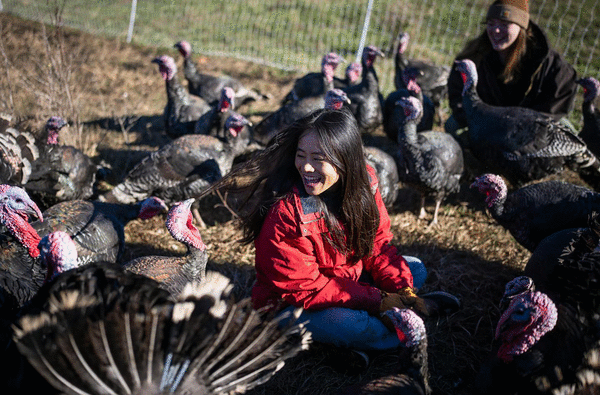
Pasture-raised turkey, Grunnet said, has “beautiful, deep reddish meat, and they have layers of marbled fat.”
Minnesota emerged as a leading turkey-growing state in the 20th century when practices to curb diseases in flocks first developed here. It also helped that Minnesota grows massive quantities of soybeans and corn used for turkey feed.
“Feed is kind of the No. 1 cost for production,” Earnest said. “In general, margins are typically pretty thin” in livestock growing.
Today, the state grows nearly one in five of the nation’s 200 million turkeys each year. National production has declined over the past decade as commercial flocks were devastated by bird flu, the U.S. Department of Agriculture has reported.
This virus, also known as H5N1, is almost always fatal for turkeys. Nearly 11 million birds been affected in Minnesota, including more than 100,000 turkeys in October alone. During the spring and fall migration seasons, when waterfowl potentially carrying the disease fly overhead, farmers are “at the edge of their seat,” said Ashley Kohls, the president of the Minnesota Turkey Growers Association.
“It hasn’t necessarily been fun having the twice-a-year kind of anxiety,” she said.
Turkey farmer Shane Wilhelm, who raises more than 110,000 birds a year, said farming is “a tough business, but it’s valuable.”
To keep bird flu off his farm, Wilhelm said workers wear protective gear including masks, coveralls and boots. Pricey laser systems atop his barns help ensure that “birds don’t want to land in the field,” he added.
“We’ve done everything we can really with biosecurity,” he said. Yet his central Minnesota operation was hit — just like many others — with another virus called avian metapneumovirus in 2024 that temporarily increased mortality among his flock.
“It was a struggle to grasp with these new viruses, but we’re getting through it,” Wilhelm said.
Turkey farmers can turn a profit, but only if “they’re able to keep their flocks healthy,” said Ashley Kohls, the president of the Minnesota Turkey Growers Association.
The companies that buy those turkeys from farmers and distribute to grocery stores have also had a turbulent few years.
Hormel Foods, which owns the Jennie-O brand, sold its whole-bird turkey business to a smaller Minnesota company in April.
In an interview earlier this year, Hormel’s now-CEO John Ghingo said turkey is still a beloved category at the Minnesota food company, with ground turkey representing a “real growth trend” among consumers.
“The whole-bird business, specifically, is something that is more seasonal in nature — more volatile, more commodity driven,” he said. “It really isn’t that value-added consumer application.”
Value-added protein refers to products made when a processor, much like a butcher, carves or grinds meat into pieces and parts, which has better profit margins and are more convenient for home cooking.
Ghingo said Hormel should be spending its resources on the “demand-driven” parts of the industry.
A company spokeswoman said this week that consumers can also still buy Jennie-O turkey breasts and smaller portions during the holidays and beyond.
Minnetonka-based Cargill also exited its “primary turkey business,” selling its processing facilities in Ohio, Missouri, Virginia and California earlier this year. It still makes some cooked and processed turkey products.
“We made this decision as we focus on strengthening our core by focusing on Cargill’s long-term health and growth ambitions,” spokeswoman April Nelson said.
The turkey business is transforming at a time when consumers are thinking differently about whole birds.
The USDA’s Economic Research Service has forecast turkey consumption per capita to drop by nearly 3% between 2026 and 2036, while the amount of broiler chicken meat people eat is expected to increase 9%.
Roasting a turkey outside of the holidays has fallen out of style in recent decades.
“While I may think cooking a whole turkey on a random Monday is not a difficult task, the average American does not obviously feel that way,” said Kohls of the Turkey Growers Association.
Thanksgiving is changing, too, said Earnest of CoBank, with smaller celebrations becoming more common.
“It may not be that they need to put a 20-pound turkey on the table for Friendsgiving, but they need a turkey offering just to kind of have that feel of, ‘Hey, we’re celebrating Thanksgiving, and we’re doing it in a traditional manner,’” he said.
Many households are willing to experiment with their Thanksgiving meal, forgoing the turkey altogether.
Kohls acknowledged that the oven-roasted turkey has been maligned over the years.
But she said there are more ways to cook a whole turkey than baking it in the oven, praising spatchcocking and smoking as easier alternatives. She also favors experimenting with other cuts of turkey if the whole bird is daunting.
“I think just the availability of information on how to cook a turkey has changed since grandma cooked her turkey,” she said.
Yet Amanda Xuan Grunnet, Maren Grunnet’s wife, said she most enjoys her turkeys baked the old-fashioned way.
Living and working in Seattle a few years ago, Maren Grunnet said the couple felt dejected by the “very consumerist culture” in the city. So, they bought a 50-acre plot of land in 2024 near Faribault and opened Lucky Lavender Farm.
On Monday morning, more than 100 turkeys roamed a stretch of sunlit prairies, while plump guineafowl — birds native to Africa — moved around freely. Goats played, ramming each other with their curling horns.
Maren Grunnet is a vegetarian, yet these turkeys will become food.
“Integrated livestock is the way to have carbon sequestration, and integrated pest management, and reduce your reliance on all of these fossil-fuel inputs,” said Maren Grunnet.
Beyond the environmental boost, Amanda Xuan Grunnet added, it’s easier to manage disease among pasture-raised birds.
And then there’s the taste.
“Even when you mess up cooking, it’s so good and it’s because they’re on pasture — their fat is so integrated within the meat,” she said.
©2026 The Minnesota Star Tribune. Visit at startribune.com. Distributed by Tribune Content Agency, LLC.









Comments