Florida's bear hunt ended Sunday. State won't say how many were killed
Published in Science & Technology News
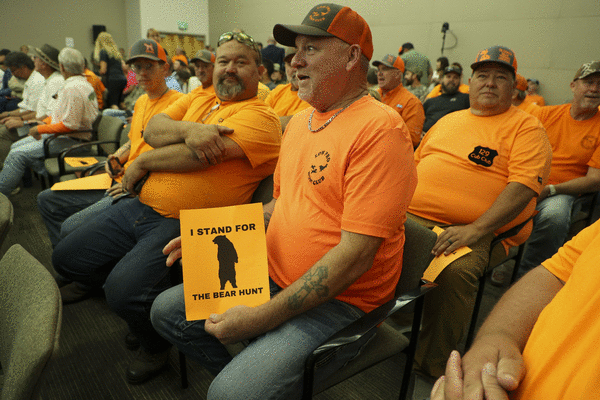
Florida’s first bear hunt in a decade ended Sunday, but state wildlife officials still won’t say how many bears were killed.
They also haven’t explained why.
“We’ll provide updates as soon as we’re able to,” a spokesperson, Shannon Knowles, replied by email Monday morning.
The 23-day hunt, which began Dec. 6 and is planned as an annual event, was restricted to 172 permit holders, each of whom won a “tag” through a lottery to take or harvest one bear, terms the agency uses for killing.
As many as 50 permit-holders may have secured a tag with no plan to participate in the hunt. Animal advocates said foes of the hunt entered the lottery to prevent the killing of bears for sport.
Each lottery entry cost $5. The state said it sold about 163,000 permit applications, and no one could win more than one.
Bear advocates have sharply criticized the Florida Fish and Wildlife Commission’s silence during the hunt, arguing it fuels mistrust in the taxpayer-funded agency.
“We’ve been ignored, misled, gaslighted and bullied by the FWC thus far,” Chuck O’Neal, founder of Apopka-based Speak Up Wekiva and Speak Up for Wildlife, said in a text Monday. “We have no confidence in an accurate death toll coming from that agency.”
Hunt foes claim public opinion strongly opposes hunting Florida bears, state-listed as a threatened species from 1974 to 2012.
O’Neal tracked kills at a check-in station during the 2015 hunt and said he used his observations to help sway FWC leadership to abbreviate the bear hunt from seven days to just two as the death count hit 304 in the initial weekend and threatened to exceed the harvest quota of 320.
There are no such stations this year. Hunters were directed to report a bear kill this year through FWC’s hunting app.
FWC has ignored requests from the Orlando Sentinel for those reports.
Chuck Echenique, president of The Future of Hunting in Florida, has said a live harvest update was unnecessary during this year’s hunt because Fish and Wildlife sharply limited the number of bear permits. By comparison, in 2015, the wildlife agency sold 3,776 bear permits.
In 2015, hunters killed 143 bears in the state’s Central bear management area, which includes Orange, Lake and Seminole counties. Hunters killed 55 bears in Marion County, the most of any Florida county. Lake was second deadliest with hunters killing 36.
This year 18 permits were issued for the Central area.
Hunting proponents warn that the conservationists’ “spare a bear” strategy this year will backfire as Fish and Wildlife is likely to increase kill quotas in future hunts. The state factors “hunter success” into its formula for calculating the harvest or kill quota for bears, the state’s largest land mammal.
FWC estimated the state’s bear population at 4050 animals during public discussions about this year’s hunt.
_____
©2025 Orlando Sentinel. Visit orlandosentinel.com. Distributed by Tribune Content Agency, LLC.



Comments